Strengthening Vocational Education in Central Europe

“Vocational education is a cornerstone in Europe’s journey toward a greener and more digital society. These projects were chosen for their potential to provide essential skills while inspiring confidence and ambition in young people to lead this transformation,” says Nicolas Schunck, Grant Area Director at Villum Foundation.
Ten projects have received a total of approximately EUR 12 million in funding to prepare students and teachers for Europe’s green and digital transitions, enabling industries to recruit highly qualified professionals who can advance sustainable and technological development.
A boost to vocational education across sectors and borders
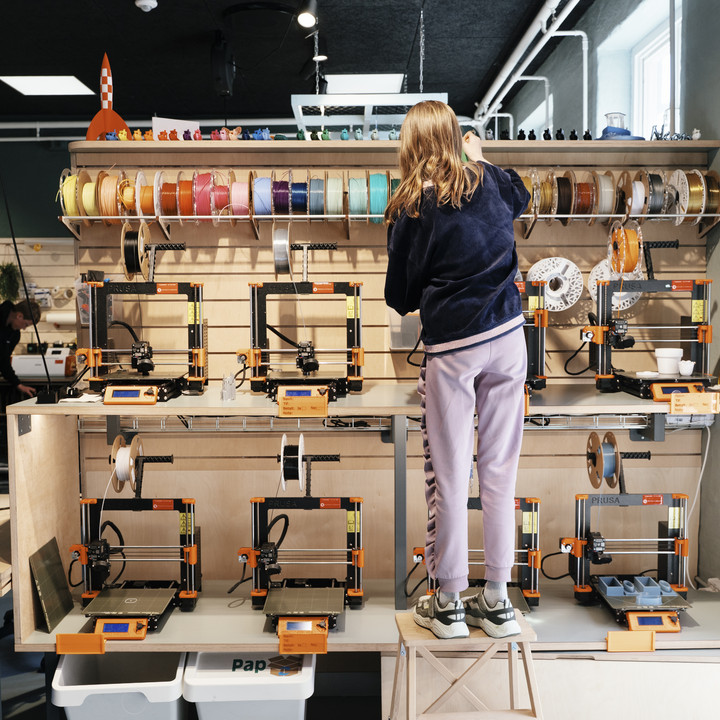
For example, the CzechUpEDU project, led by the non-profit Junior Achievement (JA Czech), will establish teaching centres equipped with advanced tools such as 3D printers, VR units and microcontrollers across three regions in Czechia. The centres will host around 7200 students annually and serve as hubs for hands-on learning. Educators and experts will develop modules on sustainability, green entrepreneurship, robotics, AI and data literacy, while teachers receive training in digital and green transition topics and inclusive methods.
In Poland, the GREENFIN project will modernise agricultural vocational education by equipping students with practical competencies in financial literacy, sustainable resource management and digital technologies. The project will be implemented in all agricultural vocational schools across Poland and will include workshops, seminars and conferences for educators, as well as entrepreneurship projects for students.
Another example is the project AI – The Path to Modern Education, which aims to implement artificial intelligence in two schools in Czechia and Slovakia. The initiative seeks to modernise all aspects of school operations, enhance educational quality, and equip both teachers and students with competencies related to AI. It will include extensive training for teachers and students and development of AI-supported teaching materials.
Innovative initiatives with high impact
The grants are awarded by Villum Foundation through the European Vocational Education and Training Initiative (EVI) under the European Youth and Education (EYE) grant area.
The purpose is to support the transition of young Europeans into education and employment and prepare them for the green and digital transformation of society and the future job market.
“The grants support high-quality vocational education projects that can have systemic impact across Europe. All selected projects are innovative initiatives that can inspire others and lead the way. This is essential for creating a competitive and strong society with young people equipped to meet the challenges of the future,” says Nicolas Schunck.
Read more about the EYE grant area.
CzechUpEDU empowers teachers and students in disadvantaged regions to lead digital and green transitions in vocational education. Building on established educational content and networks, the project will adapt resources for local needs, co-creating teaching materials, and offering blended training. Students participate in national competitions and hands-on learning at regional centres equipped with modern tools. Strategic partnerships across sectors aims to ensure systemic impact and visibility.
Organisation: Junior Achievement (JA Czech), CZ
EUR 1 million
The project aims to implement artificial intelligence in all aspects of school operations, enhancing efficiency and educational quality. Teachers will receive training to effectively use AI in their practice, while students develop skills for success in the digital age. Administrative staff benefit from AI-supported workflows. Activities include teacher and student training, school support, and collaboration with technology and educational experts. The project is cross-national and will span multiple regions in both Czechia and Slovakia, involving a network of vocational schools.
Organisation: SPgŠ a SOŠ Kladno, CZ & SK
EUR 2 million
This project addresses the need for 21st-century skills and a value-based mindset among future teachers. The research and expert project develops, pilots and evaluates new programmes focused on character education, leadership, entrepreneurship and strong teaching practice. University educators provide expert methodological guidance while researching the impact of innovative curricula through structured workshops and collaborative labs in vocational schools. The project generates evidence-informed models supporting inclusive, future-ready teacher education across Slovakia.
Organisation: Faculty of Education, Comenius University, SK
EUR 1 million
The SkillGenesis X.0 project will modernise vocational education by building a hybrid learning ecosystem aligned with the green and digital transitions. Hands-on training will cover areas such as AI, robotics, space simulation, and sustainable manufacturing. Curricula are co-developed with industry and scientific partners to meet labour market needs. The project combines infrastructure, training and curriculum innovation with inclusive, tech-driven pedagogy and will benefit teachers and students across Western Hungary.
Organisation: Pannon Business Network Association, HU
EUR 0.8 million
The project develops training programmes for teachers in digital and green transition, addressing gaps in teacher preparation and continuing education. Modules are designed for integration into teacher training and professional development, emphasising attitude shaping and practical experience. Workshops involve collaboration with higher education and sector experts, with further training organised for leaders and instructors in regional vocational centres. The developed training modules will be provided free of charge to all institutions in Hungary providing teacher training.
Organisation: Kárpátháló Egyesület, HU
EUR 1 million
This project integrates environmental sustainability into vocational education in the electronics sector. It will develop a modern educational programme and hands-on training centres to build competences in circular economy and e-waste management. Within the project, ready-to-use courses, methodological training for teachers, and a scalable implementation model will be delivered. Publicly available educational resources and recommendations will support systemic change.
Organisation: UNEP/GRID-Warsaw, PL
EUR 1.2 million
SLL-GREEN+ will strengthen vocational and technical education by implementing a scalable School Living Lab model. The focus is on building digital and green skills to support the green transition. Students will help solve local environmental challenges, developing green, digital, and civic competences and teachers and principals receive training and mentoring. Key activities include interdisciplinary labs, e-learning courses, annual hackathons, and incubation of student-led solutions. The project will be implemented in schools across Poland, with the aim of national scaling.
Organisation: Fundacja Code for Green, PL
EUR 1.6 million
The project will establish a centre for modern vocational education to drive ecological and digital transformation. By developing new curricula for an environmental Technician programme and expanding the IT/Programmer Technician programme, the project will ensure that education remains relevant to labour market needs. Teachers will be equipped with innovative pedagogical methods, including problem-based learning, dual methodology, inclusive teaching, and digital tools. Upgraded school laboratories with new equipment and software will support hands-on learning, and a national promotional campaign will help attract students to the updated programmes.
Organisation: Fundacja TETOS, PL
EUR 0.9 million
The project establishes a training and innovation centre for roofing and carpentry, enhancing digital skills in vocational education. The centre will be equipped with advanced technologies and multi-level training programmes will be developed. Courses are offered for students, teachers, and professionals, including digital design and project preparation, and open digital resources will support hybrid learning. With this project manual craftmanship will be digitalised, with strong potential for systemic impact by aligning with national training requirements.
Organisation: Polish Roofers Association
EUR 1.5 million
The GREENFIN project equips future agricultural business owners with essential skills in finance, resource management and sustainable practices enabling higher business efficiency in the agriculture sector. It addresses gaps in financial and environmental knowledge through a staged approach, covering personal and enterprise finance, planning and competitive strategies based on sustainability and innovation. Activities include workshops, mentoring and conferences. The project involves agricultural vocational schools in Poland, engaging students, teachers as well as trainers from the financial industry.
Organisation: Fundacja Edukacji Finansowej Dzieci I Młodzieży “Trampki na Giełdzie”, PL
EUR 1 million
The Villum Foundation’s grant area European Youth and Education is dedicated to empowering young Europeans to meet the challenges of the future. The aim is to support the enhancement of young peoples’ skills for the evolving job market with a focus on the green and digital transitions. Special attention is paid to ensuring that vulnerable youth also receive support to actively participate in society and become self-reliant citizens.
In even years, the foundation supports projects in France and Italy, while in odd years, it funds projects in Poland, Czechia, Slovakia and Hungary.