Enabling young people in Europe to become frontrunners in the digital and green transitions
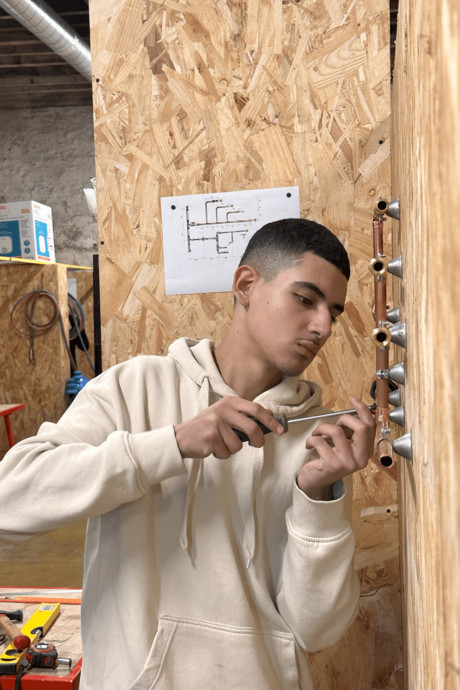
The programme supports high-quality vocational education and training, provided by competent teachers in state-of-the-art facilities - especially in fields related to the green and digital transitions.
By green transition, we understand preparing students for careers and employment opportunities in industries and sectors that work with and prioritise environmental sustainability and the reduction of environmental impact.
By digital transition, we refer to equipping students with the digital literacy, problem-solving skills and adaptability needed to excel in a wide range of careers and industries.
Quality levers may include a combination of introducing new methods such as problem-based learning, dual learning and student-centred pedagogy, a focus on diversity in the student environment, recruitment and retention, and state-of-the-art-equipment and facilities.
The deadline for the EVI call is 21st of May 2026.
In 2026, we fund projects based in France and Italy.
New educational initiatives and teacher training
We fund the development of training courses and educational pathways within the fields of the digital and green transitions. Projects must address either the green transition, the digital transition, or combine both.
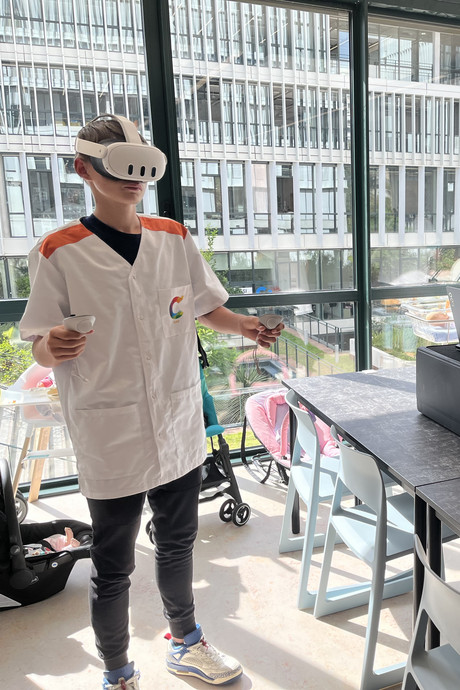
We welcome approaches that incorporate student-centred pedagogy, problem-based methods and dual training, while also including transversal skills such as collaboration, problem-solving and entrepreneurship. We emphasise innovative thinking in didactic approaches, for example those that leverage digital tools and methods to enhance learner engagement and outcomes.
We also fund the professional development and further education of teachers and school leaders related to the suggested programmes and initiatives. We expect training and professional development to be a significant part of the project, and commitment and participation from management is imperative.
Inclusive study environments and diversity in recruiting
A thriving study environment that welcomes students/apprentices and creates strong learning communities is a crucial feature of high-quality VET institutions. We encourage applicants to integrate inclusive practices and to implement recruitment and retention measures as part of the project.
State-of-the-art equipment and facilities
We fund renovations and adjustments of existing buildings used for workshops and training facilities, especially those aimed at digital technologies and green solutions. However, we only fund equipment and facilities directly related to pedagogical and didactical activities e.g. teacher training, new didactical approaches etc.
We do not fund property acquisitions or the construction of new buildings.
We prioritise funding projects that generate systemic impact, and it is essential to us that project learnings are anchored and continued beyond the project period.
Projects must involve relevant stakeholders and partners to achieve lasting systemic change. Furthermore, we encourage projects to share their findings with similar organisations, integrate learnings into legislation or institutional practices, and promote new ways of thinking.
We require projects to follow up on their activities, objectives and results, and to evaluate and communicate their project learnings. Applicants must therefore outline their plans for monitoring progress and measuring results.
Please note that we do not expect projects to initiate evaluations conducted by external researchers or consultants. However, the foundation may occasionally commission and fund cross-cutting external evaluations, and projects are expected to participate if deemed relevant.
Schools and educational institutions, civil society organisations, local innovators, and public authorities can apply. Applications from individual persons will not be accepted.
Please note that English is our primary language for communications with applicants and grantees. Applications and appendixes must therefore be submitted in English. Communication with project managers and key personnel must be possible in English without interpreters.
We prioritise projects that are:
We encourage collaboration with partners who can provide additional competencies and capabilities.
All types of costs can be included in the project budget, provided they are relevant for the project.
Renovation and construction costs are eligible if they are necessary for the proposed activities and will enhance the sustainability of the activities beyond the duration of the grant.
Fees for consultants, specialists and advisers can be included, such as specialised assistance in relation to tenders, renovation projects, legal compliance etc.
All applicants must submit project proposals through the online application portal which opens early September 2025.
The foundation's application form, budget and CV template must be used. Form and templates are available on the portal.
Are cross-country projects eligible?
Yes, but is it not a requirement.
Can organisations from countries not mentioned in the current call apply?
Yes. However, we do not consider it likely that projects from non-prioritised countries will receive a grant.
We are applying from one of the prioritised countries and we plan to include activities in non-prioritised countries. Is that possible?
Yes. It is possible to include activities in non-prioritised countries, but the justification and added value must be very clear in the application.
We represent a for-profit organisation. Can we apply for funding?
The Villum Foundation does not support for-profit activities.
Can we use our own templates?
No. The Villum Foundation’s application form, budget template, and CV template must be used. They can be downloaded from the application portal after logging in.
Should we attach a full application dossier?
No. Only a completed application form, budget, CV, and annual report will be assessed by the expert committee.
What type of annual report should be uploaded?
All text entered in the form, including letters, numbers, punctuation, and spaces, counts towards the character limit.
Should we upload letters of support with the application?
That is not required, but we encourage formal agreements between collaborating partners. For larger consortia or collaborations with authorities, letters of support can be helpful information for the Villum Foundation. Motivations for collaboration and partners’ roles should be described in the application form.
If there are more project partners in the application, who will be responsible for managing the grant?
All projects must have one coordinating organisation, which is responsible for the overall financial management and reporting.
Can a project partner be part of more than one funded project?
Yes
The working language of the foundation is English, and project managers and key contact personnel must be able to speak English. Do you require, that the target group is able to speaks English as well?
No, we do not require that the end target group is able to speak English.
Can VAT-related expenses be included in the budget?
Yes, VAT can be included as part of the budget.
Is co-financing required?
Co-financing is not a requirement, but based on experience, we know that it strengthens both anchoring and the scale of the project.
In the budget template, there is a mandatory field called ‘unspecified costs’. What does this cover?
A budget item of 15% for unspecified costs is automatically added to the applied amount. Unspecified costs are expected to cover unforeseen costs, overhead and other expenses that cannot be specifically itemised in the budget.
Is regranting possible?
Yes
How is the funding procedure?
The grant is typically transferred in yearly or half-yearly instalments, always in advance.
When can we expect the project to start?
Applicants are informed about the results in December. If granted, time must be allowed for paperwork and legal arrangements. A realistic start date is approximately 10 months after the call deadline.
Which age span is considered ‘youth’?
The programme is aimed at young people in the lower secondary age group and older. We apply a broad definition, depending on a country’s educational system. Reskilling of young adults is not within scope.
Can we get feedback before I apply?
No, but we will gladly read a one-page concept note to help determine if the project aligns with the scope of the call.
Why do you ask for descriptive different information in the registration process?
As part of the registration, you will be asked to provide information about your region and the target group(s) your project aims to impact. This information enables us to have access to key data, facilitating analysis of the pool of applicants, future promotion efforts, and is used to inform future calls. While similar details are requested in the application form, collecting them at registration allows us to categorise and track regional and demographic focus areas without manual extraction later. This helps streamline our processes and supports better alignment of our funding strategy with regional needs and target group priorities.
Print the necessary guidelines before applying.